
Updated · By JEWO Solar · Sources are linked in the text
 Illustration
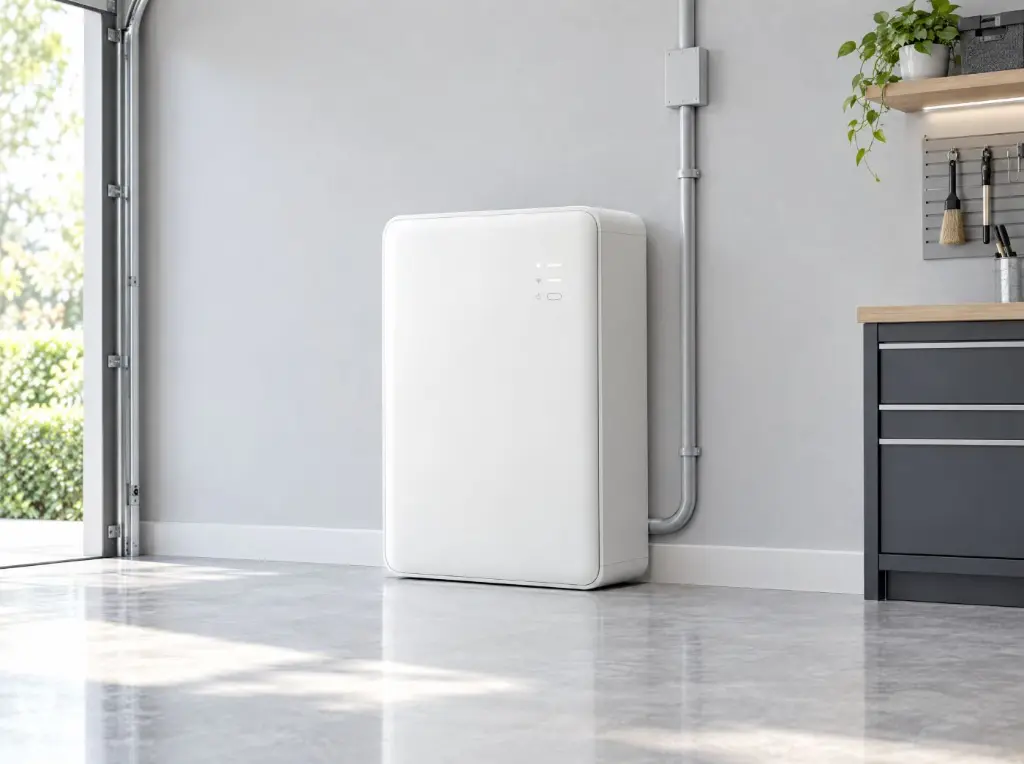
The answer depends on how your solar system is connected to the grid. If you can export all your surplus and take it back later, a battery only saves the grid storage fee. If you can export only 1 kW, a battery keeps energy that would otherwise be lost, and it pays back several times faster.
The figures we use
Example: 1,500 kWh a year from the battery
Say you use 1,500 kWh a year from the battery, roughly 150 full 10 kWh cycles. This is only an example: the real amount depends on the size of your system and how much electricity you use in the evening and at night.
| Situation | Saved per year | Battery payback |
|---|---|---|
| You can export all your surplus and take it back (you pay 7.26 ct per kWh taken back) | 1,500 × €0.0726 ≈ €109 | about 29 years |
| You can export only 1 kW (without a battery the surplus is lost, and in the evening you buy electricity at €0.24) | 1,500 × €0.24 = €360 | about 9 years |
Simple payback: the battery price (€3,200) divided by the yearly saving. It leaves out charging and discharging losses, changes in electricity prices, installation and grants.
A grant changes the numbers
In the 2025–2026 APVA call, households in Lithuania received a fixed €5,012 for a 5 kW solar system with a 10 kWh LiFePO4 battery (€4,572 with another type of lithium-ion battery), provided the system exports no more than 1 kW to the grid. Applications were accepted until 30 June 2026 or until the money ran out.
A separate APVA call for households that had already installed solar without a battery (grant for up to 7 kW) ran from 9 June to 31 August 2026: €169.96 per kW if any main component was made in China or the panel efficiency was below 23%, and €220.97 per kW otherwise. The Ministry of Energy’s 2026 plan (APVA, 30 December 2025) lists a new call for solar with a battery in the third quarter, with the grant cut to €3,500. As of 6 October 2026 that call had not been announced. Check apva.lrv.lt before you buy: APVA decides whether a system qualifies.
When a battery pays off most
You can export only 1 kW. Then every stored kWh is energy you wouldn’t otherwise produce. More in 1 kW solar without ESO technical conditions.
You use a lot of electricity in the evening and at night. The more daytime surplus you use from the battery, the more you save.
You can get a grant. A fixed grant lowers the price of the whole system, so the payback gets shorter.
When you can wait
If the grid lets you export all your surplus, the storage fee suits you and you use little electricity in the evening, the storage fee saving alone won’t pay back a battery quickly. In that case choose a hybrid inverter: you can add the battery later.
Equipment
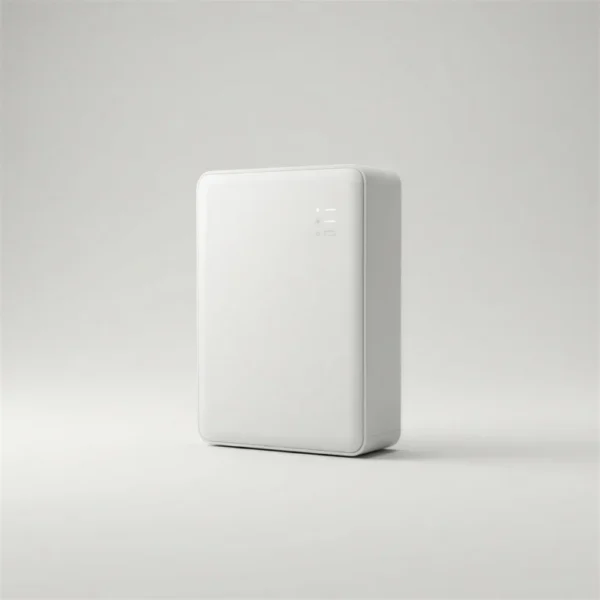
10 kWh LiFePO4 home battery
Frequently asked questions
Is a home battery worth it in Lithuania in 2026?
It depends on your grid connection. If you can export only 1 kW, a 10 kWh battery that delivers 1,500 kWh a year saves about €360 and pays back in roughly 9 years. If you can store all your surplus in the grid, you only save the 7.26 ct/kWh storage fee, about €109 a year.
What does electricity cost in Lithuania in 2026?
The public supply plan “Standartinis” costs €0.240/kWh incl. VAT from July to December 2026 (Ignitis).
What does grid storage cost in Lithuania in 2026?
For low-voltage customers: 7.26 ct per kWh taken back, or €5.03 a month per kW of permitted generation capacity, or ESO keeps 37% of the energy sent to the grid (ESO).
How long does a LiFePO4 battery last?
Our 10 kWh LiFePO4 battery is rated for 6000+ charge cycles and has a 10-year warranty.
Want us to run the numbers for you?
Send us your yearly electricity use and, if you know them, your connection terms. We’ll tell you whether a battery pays off for you.
Get a free system quoteGuides for buying solar in Lithuania
1 kW solar without ESO technical conditions
When a system can connect without ESO technical conditions, and why it then needs a battery.
What a solar system with battery costs
Equipment prices in 2026, yearly output and the grant in Lithuania.
Hybrid or grid-tie inverter
How they differ and when a hybrid is worth it.
Solar calculator
System size, number of panels and equipment price from your electricity use.