
Updated · By JEWO Solar · Sources are linked in the text
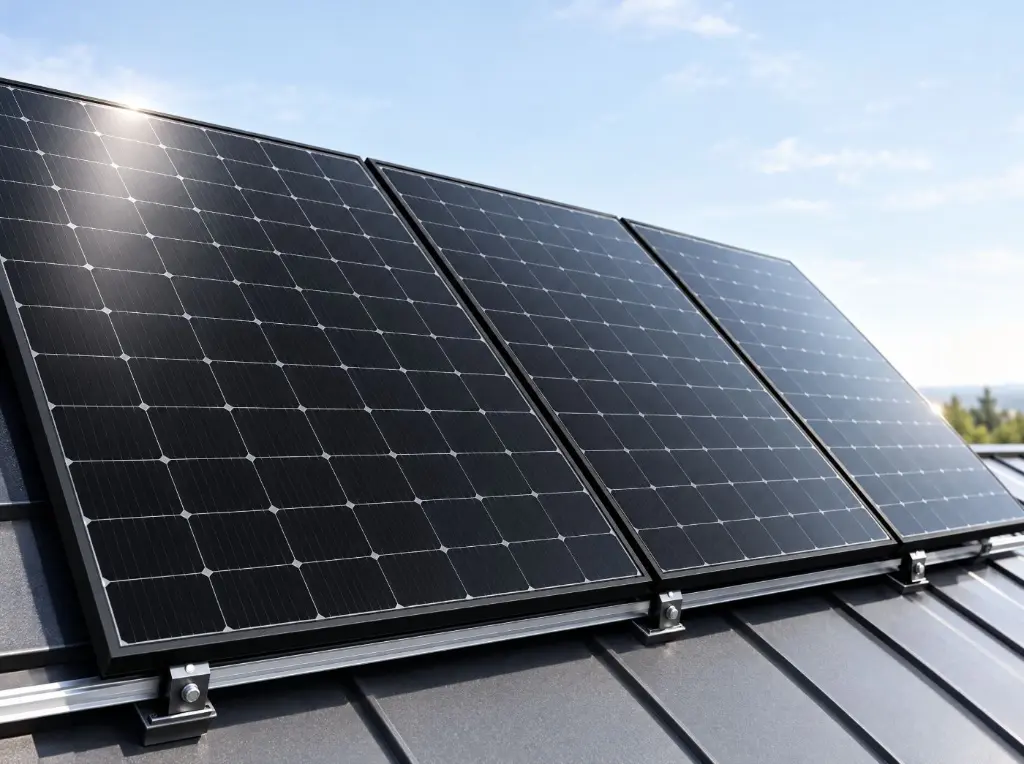 Illustration
If the grid in your area is full, ESO may refuse technical conditions for a larger solar system. Since 19 September 2025 there is a simpler route: a system that exports no more than 1 kW to the grid can be connected without ESO technical conditions (ESO).
At a glance
| In force since | 19 September 2025 (the limit used to be 0.8 kW) |
|---|---|
| Limit | up to 1 kW of power sent to the grid |
| System size | can be larger, e.g. 5 kW, if the inverter limits export |
| ESO technical conditions | not needed |
| Paperwork | the installer files a declaration on the ESO website |
| Battery | stores surplus that does not fit within the 1 kW limit |
What changed
Before, a system could connect without technical conditions if it exported up to 0.8 kW. ESO raised this limit to 1 kW. The limit applies to the power the system sends to the grid, and the inverter settings enforce it.
The system itself can be bigger. For example, the 2025–2026 APVA grant was for 5 kW systems with a 10 kWh battery that export no more than 1 kW.
How the system is connected
An installer fits the system. They set the inverter’s export limit and submit a declaration with the system details on the ESO website. If you already have a system with a 0.8 kW limit, the installer can submit an updated declaration with the new 1 kW limit (ESO).
The inverter must support export limiting. Check the model’s specification before you buy, or ask us.
Why a battery makes sense with a 1 kW limit
On a sunny summer day a 5 kW system produces well over 1 kW, while the house often uses less at that time. Without a battery, the energy you can’t use straight away and can’t export within the 1 kW limit is never produced: the inverter throttles the panels. A battery stores that surplus, and you use it in the evening.
For that you need a hybrid inverter, which runs both the panels and the battery. We explain the difference in Hybrid or grid-tie inverter.
Grant
In the 2025–2026 APVA call, households in Lithuania received a fixed €5,012 for a 5 kW solar system with a 10 kWh LiFePO4 battery (€4,572 with another type of lithium-ion battery), provided the system exports no more than 1 kW to the grid. Applications were accepted until 30 June 2026 or until the money ran out.
A separate APVA call for households that had already installed solar without a battery (grant for up to 7 kW) ran from 9 June to 31 August 2026: €169.96 per kW if any main component was made in China or the panel efficiency was below 23%, and €220.97 per kW otherwise. The Ministry of Energy’s 2026 plan (APVA, 30 December 2025) lists a new call for solar with a battery in the third quarter, with the grant cut to €3,500. As of 6 October 2026 that call had not been announced. Check apva.lrv.lt before you buy: APVA decides whether a system qualifies.
Equipment for this kind of system
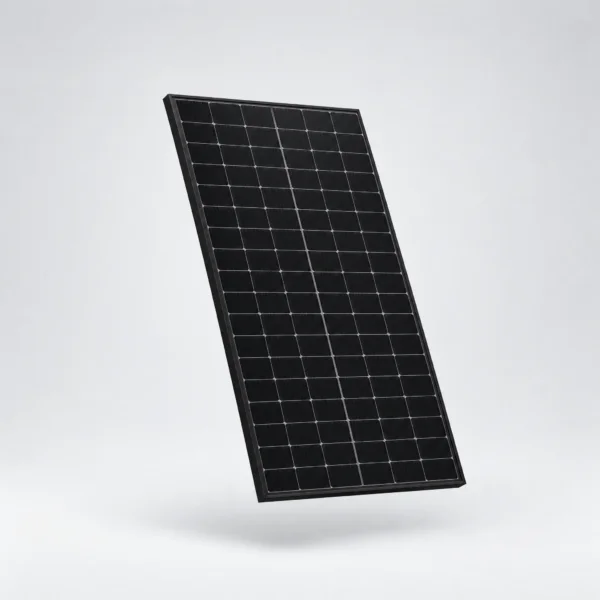
JA Solar 485W all-black N-type panel
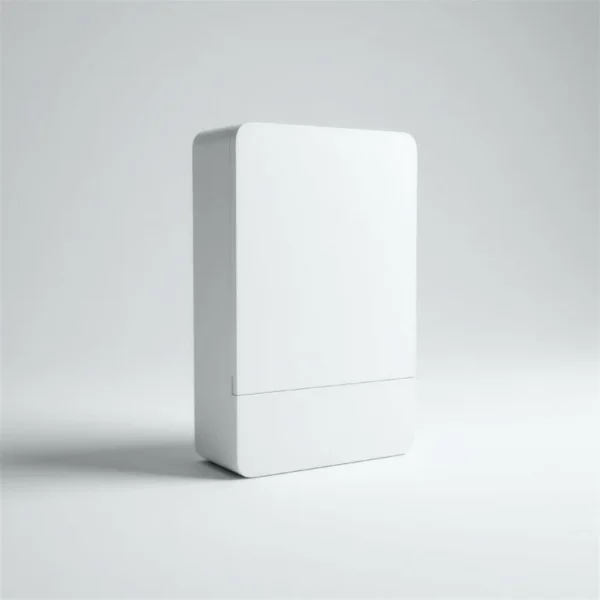
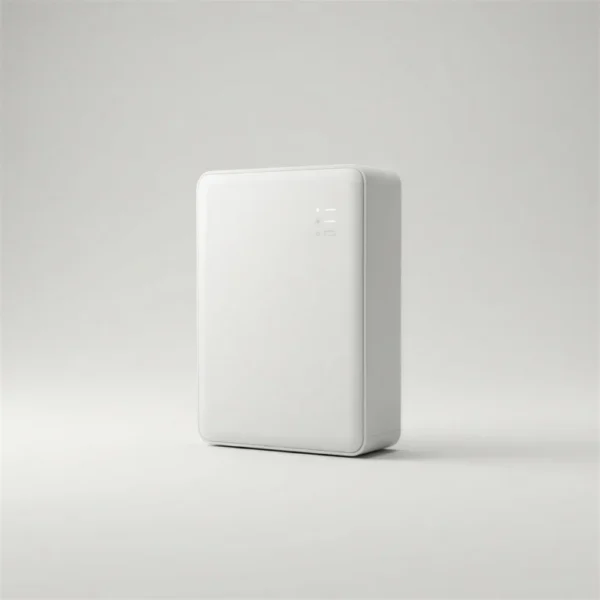
10 kWh LiFePO4 home battery
The full kit with a price comparison is on the solar kit with battery page.
Frequently asked questions
Does the 1 kW limit mean the system can only be 1 kW?
No. The limit applies to the power the system exports to the grid. The system can be bigger if the inverter limits export to 1 kW.
Who submits the documents to ESO?
The installer who fitted the system submits a declaration with its details on the ESO website. In this case you don’t need technical conditions from ESO.
Is a battery worth it with a 1 kW limit?
Usually yes. Without a battery, surplus you don’t use straight away and that doesn’t fit within the 1 kW limit is lost. The 2025–2026 APVA grant was aimed at exactly these systems: with a battery and 1 kW export.
Since when does the 1 kW limit apply?
ESO raised the limit from 0.8 kW to 1 kW on 19 September 2025.
Want a system with 1 kW export?
Send us your roof size and yearly electricity use. We’ll choose the panels, inverter and battery for free.
Get a free system quoteGuides for buying solar in Lithuania
What a solar system with battery costs
Equipment prices in 2026, yearly output and the grant in Lithuania.
Hybrid or grid-tie inverter
How they differ and when a hybrid is worth it.
Is a home battery worth it?
A worked example with 2026 electricity prices and grid storage fees in Lithuania.
Solar calculator
System size, number of panels and equipment price from your electricity use.